HR Workstation
An AI workspace for HR workflows
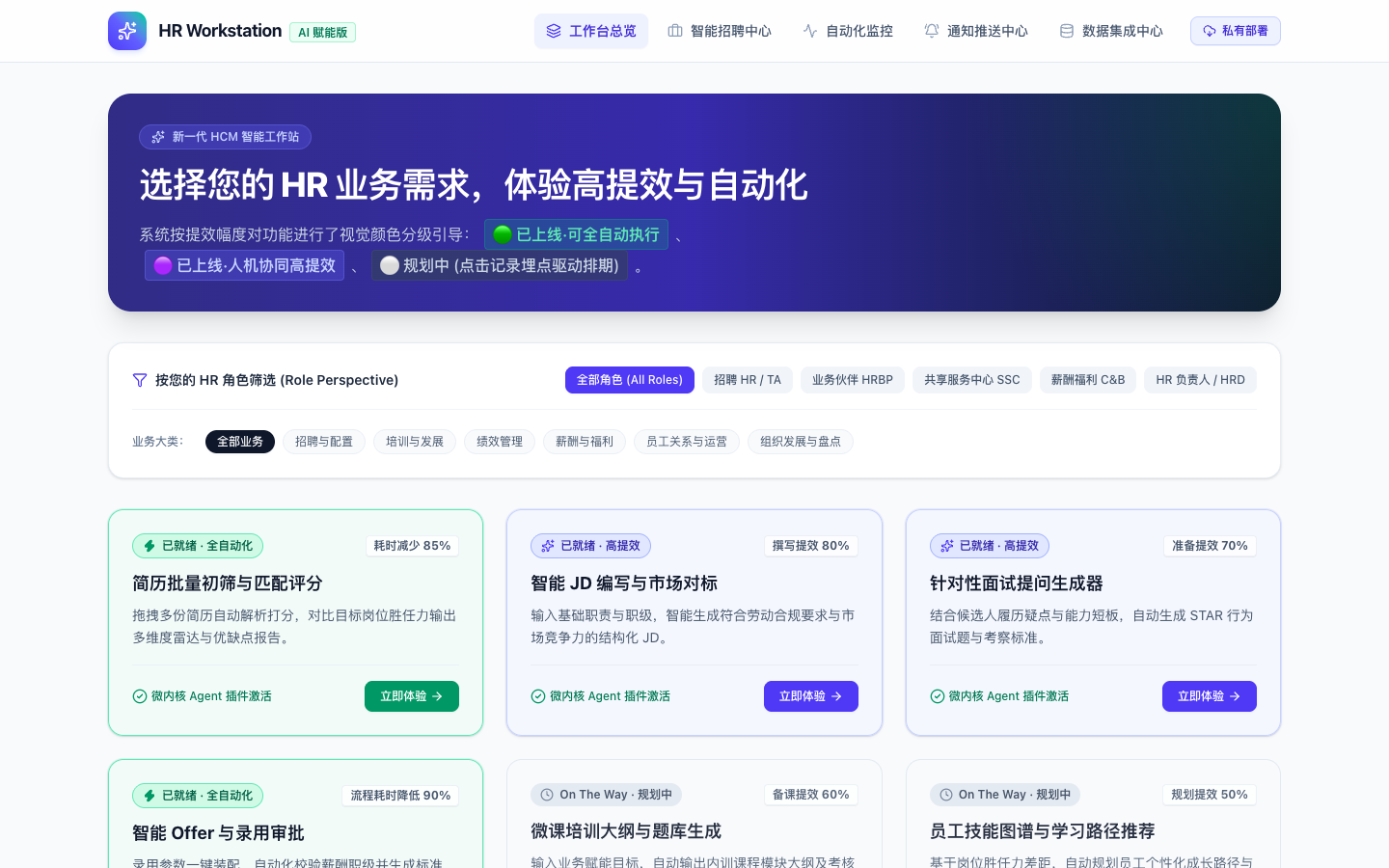
A modular workspace for recruiters, HRBPs, SSC, C&B and HR directors. Plugin agents turn resume screening, JDs, interview guides, offers, automation monitoring and notifications into one traceable pipeline.
The problem
High-frequency HR work is scattered across email, spreadsheets, ATS and chat. Repetition is high, status is invisible, and failed automations are hard to trace.
Approach
- Use a microkernel plus plugin agents so new scenarios plug in without cramming all logic into one page.
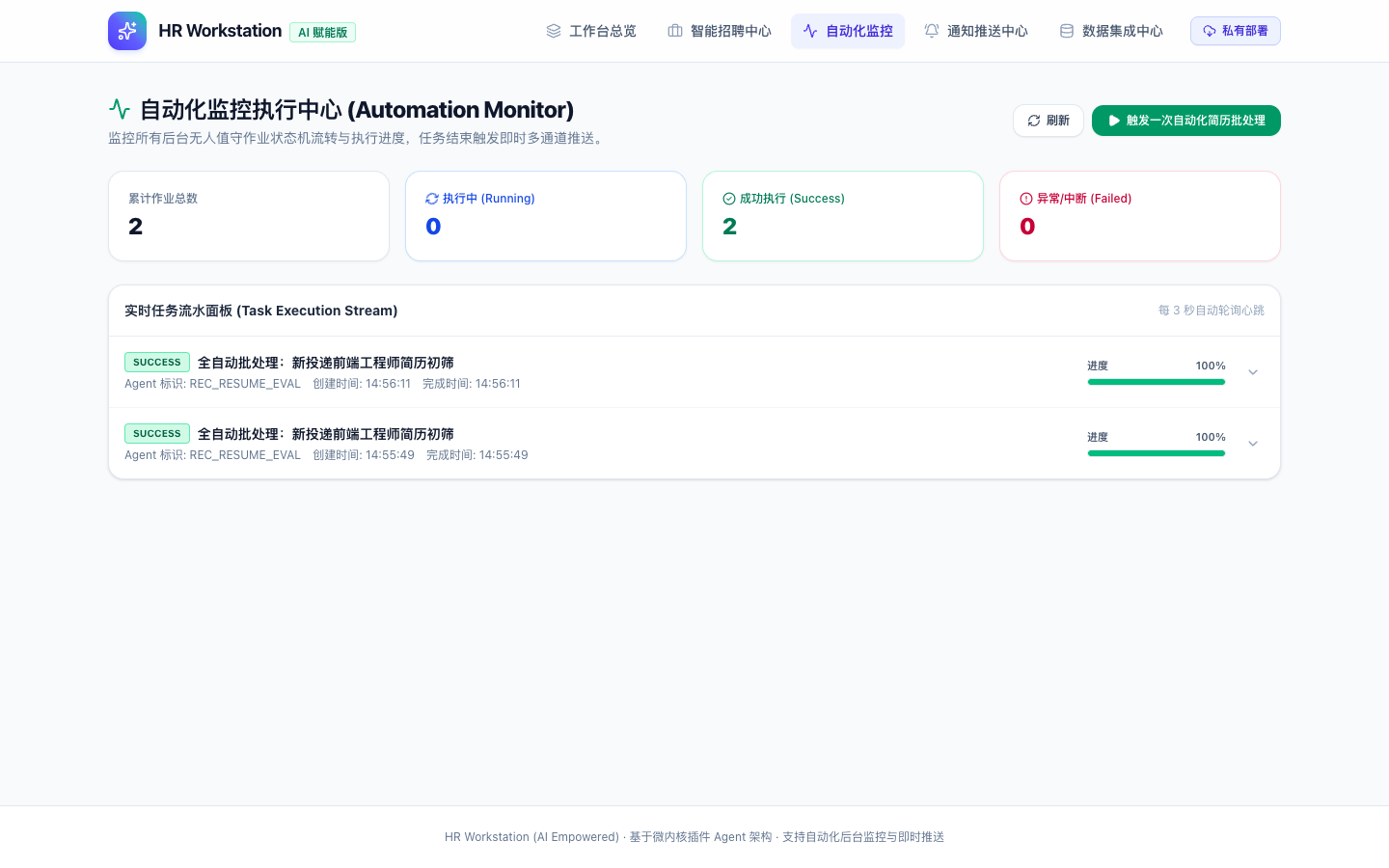
- Run long tasks in a background executor with a PENDING → RUNNING → SUCCESS / FAILED state machine and visible progress.
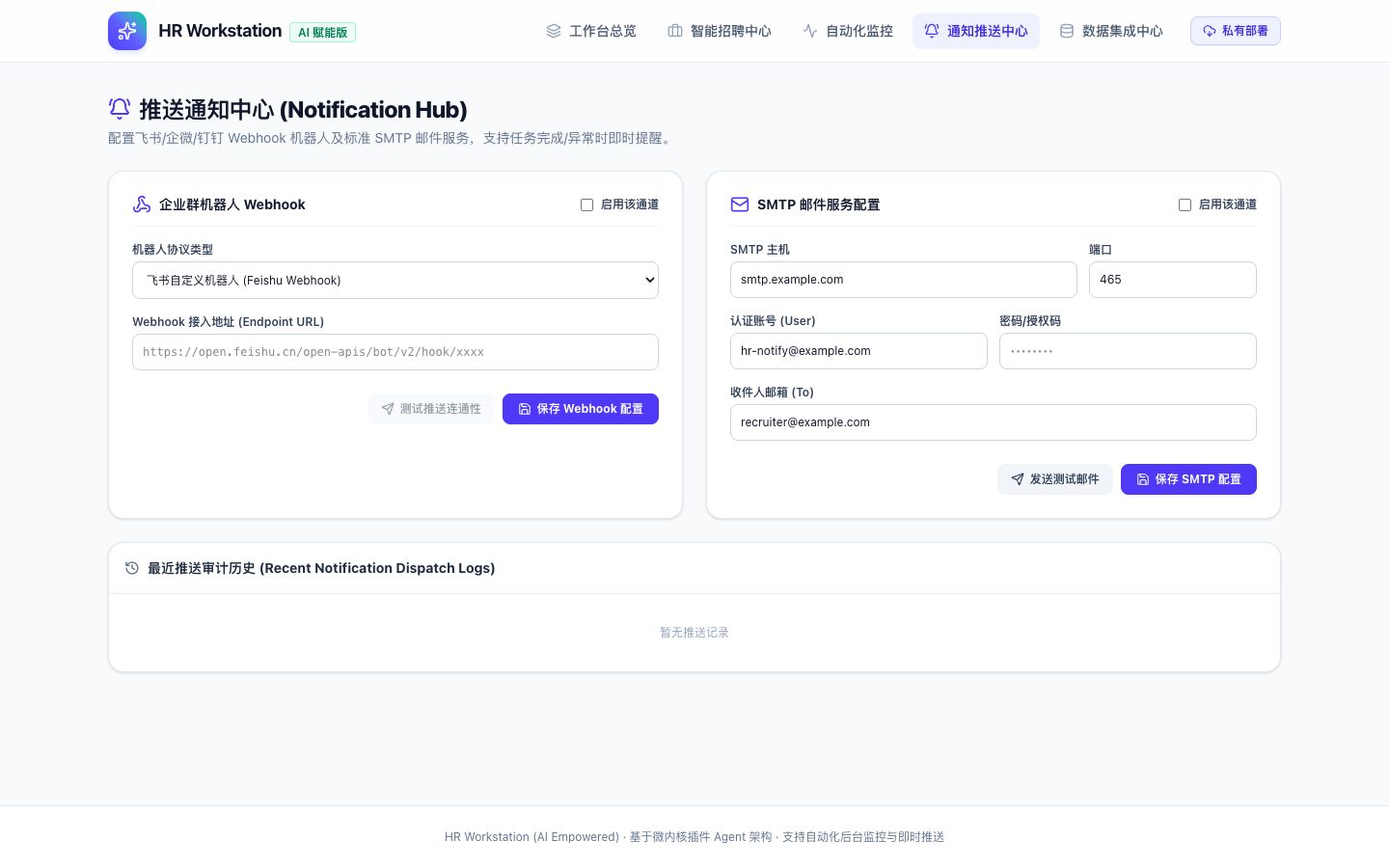
- Unify WeCom, Feishu, DingTalk webhooks and SMTP into a notification hub so completion and failure are traceable.
What is inside
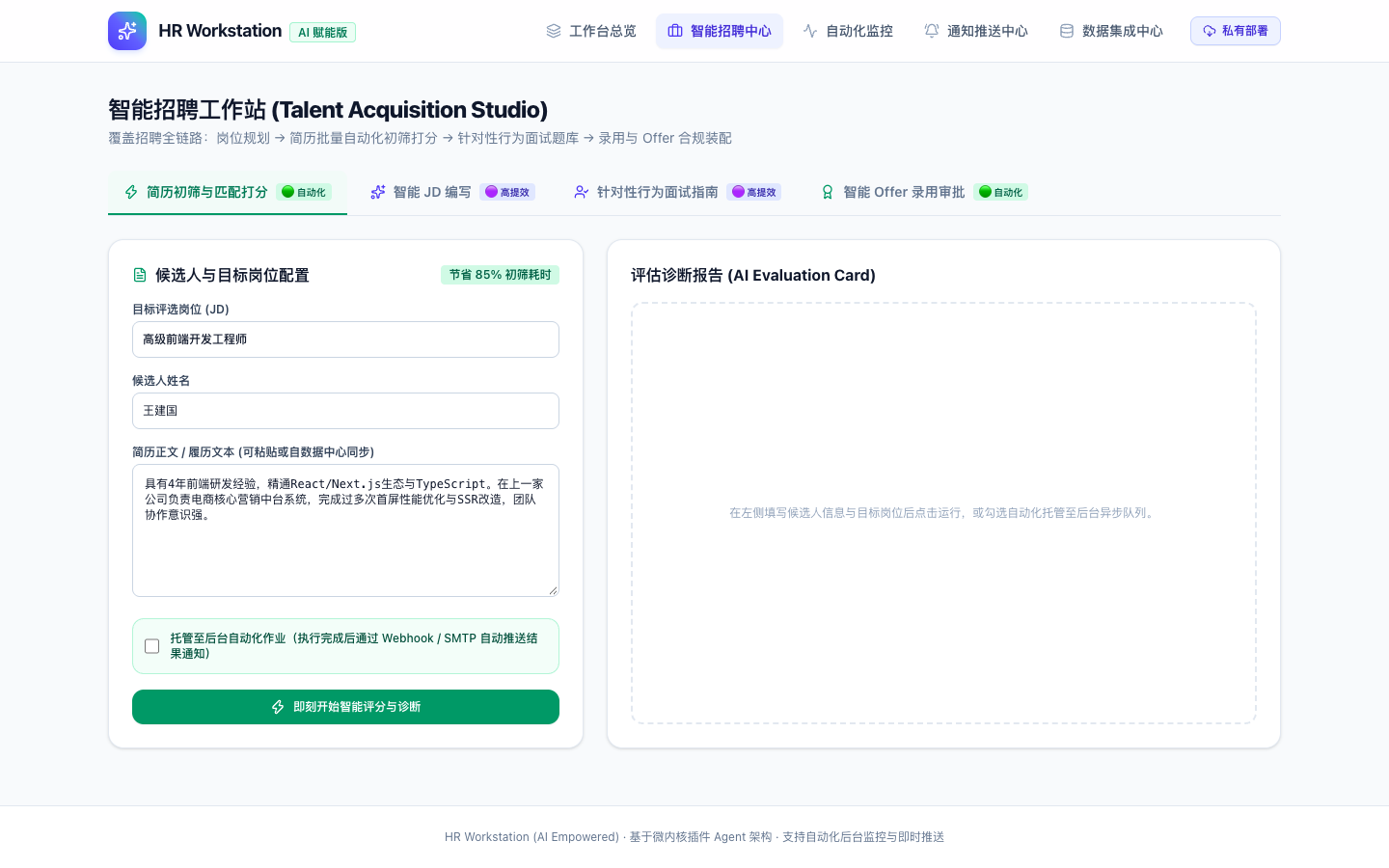
- Recruitment: batch resume scoring, JD generation, STAR interview guides and offer assembly.
- Automation hub: state machine, progress, duration, failure diagnosis and structured JSON drill-down.
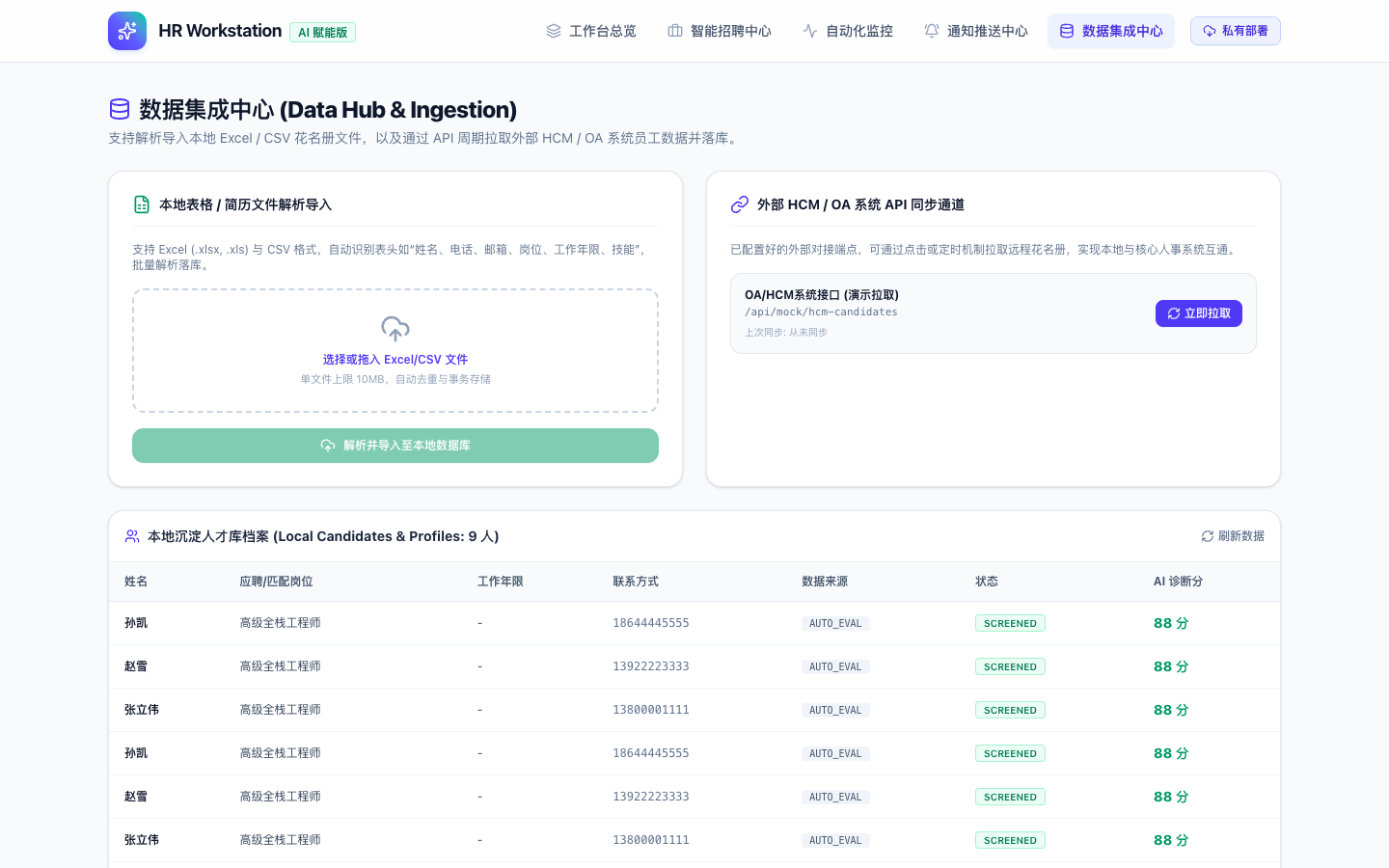
- Notifications and data: WeCom/Feishu/DingTalk/SMTP, Excel/CSV roster import and external API sync.
- Role-based HR views with colour-coded automated, high-efficiency and planned capabilities.
Live system interface & core modules
Screenshots from the live deployment of HR Workstation, covering candidate screening, automation monitoring, notification hub and data ingestion:
Deploy it yourself
Prerequisites
Node.js 20+ and local SQLite are enough; prepare an OpenAI-compatible API config if you want model calls.
- Clone, run npm install, copy .env and configure the database plus optional model API.
- Run npm run seed for seed data, then npm run dev to open the local workspace.
- Walk through a recruitment or automation task, verify notifications and state changes, then connect real data.
Keep demo data separate from real employee data, and confirm privacy and masking requirements before using personal information.
A system to ship, or a workflow to improve?
Tell me the current state, the outcome you need and your timeline. I reply within 24–48 hours and start with whether it is worth doing — and the fastest path.